TL;DR
- Tracking behavior data helps you identify patterns and adjust your approach.
- MeltdownGuide provides crisis support, behavior tracking, and a library of 500+ strategies to help your family.
- Consistency across caregivers and environments produces the best results.
- Evidence-based strategies can reduce both the frequency and intensity of difficult moments.
Understanding Self Harm and Autism Warning Signs
Getting understanding self harm and autism warning signs right can make a real difference. One thing that catches many parents off guard about self harm and autism warning signs is how much the environment matters.
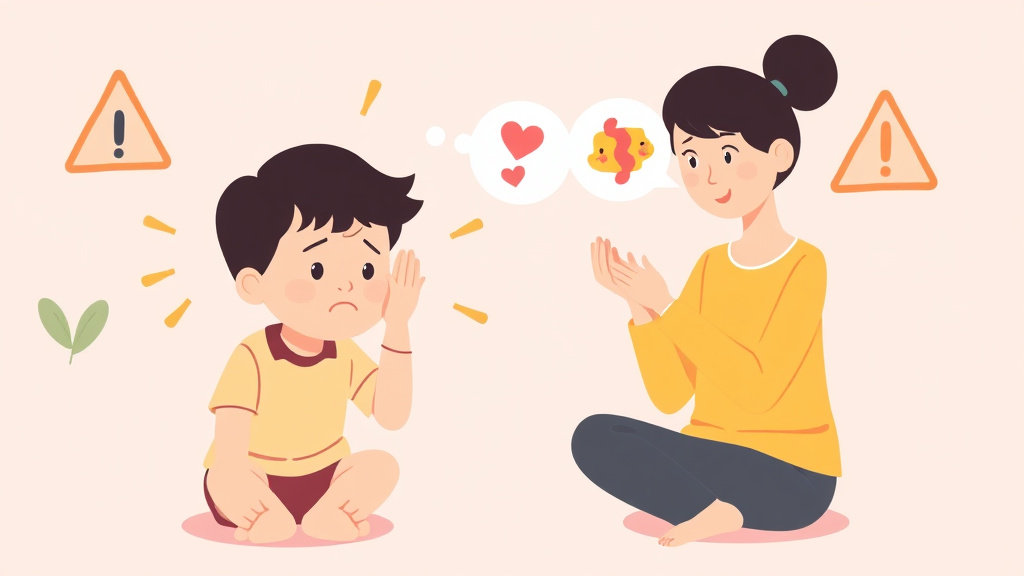
One thing that catches many parents off guard about self harm and autism warning signs is how much the environment matters. Small changes to lighting, noise levels, seating arrangements, or daily schedules can have an outsized impact on your child's ability to cope. Before adding new interventions or strategies, take a careful look at the environment and see if simple modifications can reduce the demands on your child's regulatory system.
Understanding self harm and autism warning signs starts with recognizing that behavior is communication. Your child is not giving you a hard time. Your child is having a hard time. This shift in perspective changes everything about how you approach the situation and sets the foundation for meaningful progress. When you view challenging behavior as a signal rather than defiance, your response becomes supportive rather than punitive, and that makes all the difference in the world for your child's development.
The science behind self harm and autism warning signs has evolved significantly in recent years. We now know that the autonomic nervous system plays a central role in how children respond to stress. When a child's nervous system detects threat (whether real or perceived), it triggers a fight, flight, or freeze response that the child cannot consciously control. This is not a choice. It is a neurological event that requires co-regulation from a calm adult, not consequences or lectures.
What the Research Says
Current evidence on self harm and autism warning signs suggests that a combination of environmental modifications, skill teaching, and caregiver support produces the best outcomes. No single intervention works in isolation. The most successful families use a comprehensive approach that addresses the child's needs, the family's capacity, and the school environment. Research consistently shows that parent training and support are just as important as direct interventions with the child.
According to research in developmental psychology and autism research, the most important factor in self harm and autism warning signs is the quality of the relationship between parent and child. When children feel safe, understood, and supported, they are more likely to develop the skills they need to manage challenges independently over time. Studies show that warm, responsive parenting combined with clear structure and boundaries produces the best outcomes for neurodivergent children across all age groups.
Research supports a structured approach to self harm and autism warning signs. Studies published in peer-reviewed journals have shown that families who use consistent, evidence-based strategies see meaningful improvements within 4 to 8 weeks. The key factors include consistency across caregivers, data-driven decision making, and regular strategy adjustments based on the child's response. Families who track data and adjust their approach outperform those who rely on intuition alone, regardless of the specific strategies they use.
Longitudinal studies on self harm and autism warning signs tell us something important: early intervention matters, but it is never too late to start. Families who begin implementing evidence-based strategies see improvement regardless of the child's age. The trajectory may differ (younger children often progress faster), but the direction is consistently positive when strategies are applied with fidelity and consistency. If you feel like you have missed a critical window, take heart. The best time to start was yesterday. The second-best time is today.
| Area | What You Might See | What It Means |
|---|---|---|
| Communication | Limited or no spoken language, echolalia | Child may need AAC or alternative communication support |
| Social interaction | Prefers parallel play, limited eye contact | Different social wiring, not lack of interest |
| Routines | Distress with changes, rigid preferences | Predictability provides safety and regulation |
| Sensory | Covers ears, avoids textures, seeks movement | Sensory processing differences affect daily function |
| Special interests | Intense focus on specific topics | A strength that can be used for learning and connection |
| Motor skills | Toe walking, unusual gait, fine motor delays | May benefit from occupational or physical therapy |
When to Seek Professional Help
When choosing a professional to help with self harm and autism warning signs, look for someone with specific experience working with neurodivergent children. General training in child psychology or education is a start, but specialization matters. Ask about their experience with your child's specific diagnosis, their approach to treatment, how they involve parents, and how they measure progress. A good provider welcomes these questions and answers them clearly.
Professional support for self harm and autism warning signs can also be valuable even when things are going well. A trained specialist can help you fine-tune your approach, identify patterns you might miss, and plan proactively for upcoming challenges like transitions, schedule changes, or developmental milestones. Think of it like preventive maintenance rather than emergency repair. Regular check-ins with a knowledgeable professional help you stay ahead of potential challenges.
Seek professional help with self harm and autism warning signs if your child's safety or the safety of others is at risk. This includes self-injurious behavior, aggressive behavior that causes harm, elopement (running away), or any situation where you feel unable to keep your child safe. These situations require professional assessment and a safety plan. Do not wait for things to improve on their own when safety is involved. Contact your child's pediatrician, a crisis line, or go to the emergency room if needed.
Consider seeking professional help with self harm and autism warning signs if you notice that the challenges are affecting other areas of your child's life. When behavioral difficulties start impacting academic performance, friendships, family relationships, or your child's mental health, it is a sign that the current support level may not be sufficient. Early professional intervention can prevent secondary problems like anxiety, depression, or school avoidance from developing.
Related Reading
Practical Steps for Self Harm and Autism Warning Signs
Here is what this looks like in practice. Start by identifying the specific situations where self harm and autism warning signs applies in your family's daily life. Write them down. Be specific about the time of day, the setting, who was present, and what happened immediately before and after. This level of detail helps you spot patterns you would otherwise miss. Many parents are surprised to discover that 80% of their challenges happen in just two or three predictable situations.
Timing is everything when it comes to self harm and autism warning signs. The best time to teach a new skill is when your child is calm, fed, rested, and in a good mood. The worst time is during a crisis, transition, or difficult moment. Many parents make the mistake of introducing strategies during the exact situations when they are needed most, but children cannot learn new skills when their nervous system is in survival mode. Teach the skill during calm times, practice it repeatedly, and then gently prompt your child to use it when challenges arise.
A practical approach to self harm and autism warning signs involves breaking it down into manageable steps. Do not try to change everything at once. Pick one strategy, practice it for two weeks, and track the results before adding another. This prevents overwhelm for both you and your child. Keep a simple log of what you tried, when you tried it, and what happened. This data becomes invaluable when you need to adjust your approach or share information with professionals.
When applying strategies for self harm and autism warning signs, consistency matters more than perfection. You do not need to execute every technique flawlessly. What matters is that you show up, stay regulated yourself, and follow through with the plan you have set. Children with autism and ADHD need predictability from the adults around them. When your response is consistent, your child learns what to expect, and that predictability itself becomes a regulating force in their life.
Create a written plan for self harm and autism warning signs that every caregiver can follow. This includes parents, grandparents, babysitters, teachers, and anyone else who spends time with your child. The plan should be simple enough to fit on one page and clear enough that someone unfamiliar with your child could understand the basics. Include what to do, what to avoid, and who to call if the situation escalates beyond what the plan covers.
Tools and Resources
Beyond digital tools, consider building a physical toolkit for self harm and autism warning signs. This might include visual supports (printed schedules, social stories, choice boards), sensory tools (fidgets, noise-canceling headphones, weighted lap pads), and communication aids (picture cards, emotion charts, first-then boards). Keep a portable version in your bag for outings and a more complete version at home. Having the right tools within reach makes it easier to implement strategies consistently.
Technology can streamline self harm and autism warning signs significantly. Apps that track behavior patterns, generate reports for IEP meetings, and provide on-demand strategy suggestions save parents hours of manual documentation. The data these tools collect also helps professionals make better recommendations for your child. When you walk into an IEP meeting or therapy session with clear data showing patterns over weeks or months, the conversation becomes much more productive.
Books and online resources can deepen your understanding of self harm and autism warning signs, but be selective about your sources. Look for resources written by professionals with credentials in developmental psychology and autism research and, when possible, seek perspectives from autistic adults and adults with ADHD who can share their lived experience. The combination of professional knowledge and lived experience gives you the most complete picture of what your child needs.
Community resources for self harm and autism warning signs are more widely available than many parents realize. Local disability organizations, parent training programs, support groups, and respite care services exist in most areas. Your child's school district, pediatrician, or local autism society can point you toward resources specific to your region. Online communities also provide 24/7 access to parents who understand exactly what you are going through.
Strategies That Work
Consider the role of choice and control in your approach to self harm and autism warning signs. Children with autism and ADHD often feel like their lives are controlled by others: adults make the schedule, choose the activities, set the rules, and decide the consequences. Offering genuine choices within appropriate boundaries restores a sense of autonomy. This can be as simple as 'do you want to do math first or reading first?' or 'do you want your break in the calm corner or outside?' These small choices have a big impact on cooperation.
Many families find success with self harm and autism warning signs when they involve their child in problem-solving. Even young children can participate in identifying what helps them and what makes things harder. Use simple language, visual choices, and respect your child's input. This builds self-advocacy skills that will serve them throughout their life. A child who can say 'I need a break' or 'this is too loud' is a child who is learning to manage their own needs rather than relying entirely on adults to notice and intervene.
Consider using a proactive approach to self harm and autism warning signs. Rather than waiting for problems to occur, set up the environment and routines to minimize triggers. This might include adjusting schedules, reducing sensory input, providing advance warning about changes, or teaching coping skills during calm moments when your child can actually absorb new information. Proactive strategies take more planning upfront, but they dramatically reduce the number of crises you face over time.
Layering strategies for self harm and autism warning signs creates a more robust support system. No single strategy will solve everything. Instead, combine environmental modifications (changing what surrounds your child), skill teaching (building your child's capacity to cope), and relationship strengthening (deepening the trust between you and your child). When all three layers are working together, you create a safety net that catches problems at multiple points before they escalate to crisis.
Effective strategies for self harm and autism warning signs fall into three categories: preventive, in-the-moment, and recovery. Preventive strategies help you reduce the frequency and intensity of difficult situations before they happen. In-the-moment strategies help you respond effectively when things escalate despite your prevention efforts. Recovery strategies help everyone regroup, learn from the experience, and strengthen the relationship afterward. All three categories matter equally, though most parents understandably focus on in-the-moment approaches.
How MeltdownGuide Helps
MeltdownGuide's strategy library includes 500+ evidence-based approaches specifically for autistic children. Filter by age, setting, and challenge type to find strategies that match your child's unique profile. The behavior tracking feature helps you share concrete data with therapists and school teams.
Try our free tools
Frequently Asked Questions
What are the risks of understanding self harm and autism warning signs?
The relationship between self harm and autism warning signs and your child's nervous system is important to understand. Children with autism and ADHD often have nervous systems that are wired to detect threat more readily than neurotypical children. This means they may react more intensely to situations that seem minor to adults.
What the Research Says?
Current evidence on self-harm and autism warning signs suggests that a combination of environmental modifications, skill teaching, and caregiver support produces the best outcomes. No single intervention works in isolation. The most successful families use a comprehensive approach that addresses the child's needs, the family's capacity, and the school environment. Research consistently shows that this multifaceted approach leads to the greatest improvements.
When to Seek Professional Help?
When choosing a professional to help with self-harm and autism warning signs, look for someone with specific experience working with neurodivergent children. General training in child psychology or education is a start, but specialization matters. Ask about their experience with your child's specific diagnosis, their approach to treatment, how they involve parents, and how they measure progress. A professional with the right expertise can make a significant difference in the effectiveness of the intervention.
What is the process for practical steps for self-harm and autism warning signs?
Here is what this looks like in practice. Start by identifying the specific situations where self-harm and autism warning signs apply in your family's daily life. Write them down. Be specific about the time of day, the setting, who was present, and what happened immediately before and after. This level of detail helps you spot patterns you would otherwise miss. Many parents are surprised to discover that certain times, places, or interactions are more likely to trigger these behaviors.
What should I know about tools and resources?
Beyond digital tools, consider building a physical toolkit for self-harm and autism warning signs. This might include visual supports (printed schedules, social stories, choice boards), sensory tools (fidgets, noise-canceling headphones, weighted lap pads), and communication aids (picture cards, emotion charts, first-then boards). Keep a portable version in your bag for outings and a more complete set at home. These tangible resources can help your child self-regulate and express their needs.
What should I know about strategies that work?
Consider the role of choice and control in your approach to self-harm and autism warning signs. Children with autism and ADHD often feel like their lives are controlled by others: adults make the schedule, choose the activities, set the rules, and decide the consequences. Offering genuine choices within appropriate boundaries restores a sense of autonomy. This can be as simple as 'do you want to do your homework before or after dinner?' or 'would you like to use the blue or the green fidget?'
How MeltdownGuide Helps?
MeltdownGuide's strategy library includes 500+ evidence-based approaches specifically for autistic children. Filter by age, setting, and challenge type to find strategies that match your child's unique profile. The behavior tracking feature helps you share concrete data with therapists and school teams.
Start Supporting Your Child Today
You do not have to figure out self harm and autism warning signs alone. MeltdownGuide gives you crisis support, behavior tracking, and 500+ evidence-based strategies in one app. Start your free 14-day trial and see the difference data-driven parenting support can make.