TL;DR
- Evidence-based strategies can reduce both the frequency and intensity of difficult moments.
- Abc Data Collection for Parents is a challenge many families face, and you are not alone in navigating it.
- Consistency across caregivers and environments produces the best results.
- Tracking behavior data helps you identify patterns and adjust your approach.
Understanding Abc Data Collection for Parents
The science behind abc data collection for parents has evolved significantly in recent years. We now know that the autonomic nervous system plays a central role in how children respond to stress. When a child's nervous system detects threat (whether real or perceived), it triggers a fight, flight, or freeze response that the child cannot consciously control. This is not a choice. It is a neurological event that requires co-regulation from a calm adult, not consequences or lectures.
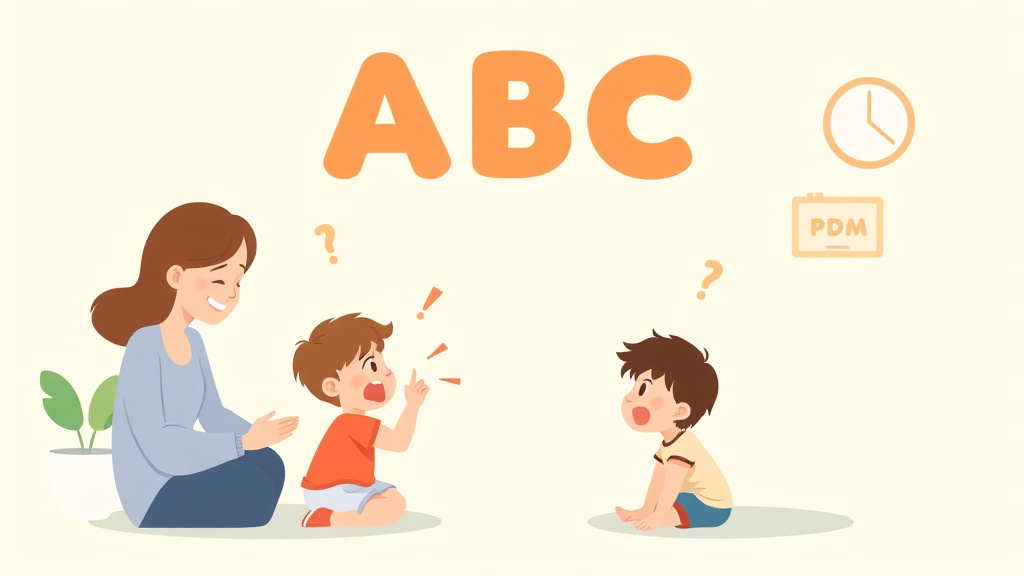
Most parents first encounter abc data collection for parents without any preparation. The reality is that understanding this area requires both practical experience and knowledge of how neurodivergent children process the world around them. Research in applied behavior analysis and behavioral science shows that children respond differently based on their sensory profile, communication abilities, and emotional regulation capacity. What works beautifully for one child may have no effect on another, which is why personalized approaches matter so much.
When we talk about abc data collection for parents, we need to consider the whole child. Every neurodivergent child has a unique combination of strengths and challenges. What works for one family may not work for another. The key is to observe your child carefully, track what happens before and after difficult moments, and adjust your approach based on real data rather than assumptions. This means keeping notes, looking for patterns, and being willing to try different approaches until you find what clicks.
One thing that catches many parents off guard about abc data collection for parents is how much the environment matters. Small changes to lighting, noise levels, seating arrangements, or daily schedules can have an outsized impact on your child's ability to cope. Before adding new interventions or strategies, take a careful look at the environment and see if simple modifications can reduce the demands on your child's regulatory system.
Common Mistakes to Avoid
Overcomplicating things is another common mistake with abc data collection for parents. Parents sometimes try to implement five new strategies simultaneously, track a dozen different behaviors, and overhaul every routine in the house. This leads to burnout and inconsistency. Start simple. Pick your biggest challenge, choose one strategy to address it, implement it consistently for two weeks, and then evaluate. Incremental progress is still progress, and it is far more sustainable than an all-or-nothing approach.
Relying too heavily on punishment or consequences is a mistake that many parents make with abc data collection for parents before they understand how neurodivergent brains work. Traditional discipline strategies (time-outs, loss of privileges, grounding) are designed for children who have the neurological capacity to connect their behavior to the consequence and make a different choice next time. Many neurodivergent children lack the executive function, emotional regulation, or impulse control to make that connection reliably. Skill-building approaches consistently outperform punitive approaches for these children.
Another frequent pitfall in abc data collection for parents is inconsistency between caregivers. When mom uses one approach and dad uses another, or when home strategies differ completely from school strategies, children become confused and progress stalls. Get all caregivers on the same page with a written plan that everyone follows. This does not mean every person needs to be identical in their approach, but the core strategies and expectations should be consistent.
Many parents fall into the trap of comparing their child's progress to other children when working on abc data collection for parents. Every child's trajectory is different. Focus on your child's individual growth, no matter how small. Celebrate steps forward and view setbacks as information rather than failure. A child who went from three meltdowns per day to two has made meaningful progress, even if other children in the same program are progressing differently.
| Data Type | What to Record | Example |
|---|---|---|
| Antecedent | What happened immediately before the behavior | Teacher said 'time to clean up toys' |
| Behavior | Observable, measurable description of what the child did | Child threw toys on the floor and screamed for 3 minutes |
| Consequence | What happened immediately after the behavior | Teacher removed the task and child went to calm corner |
| Setting | Environmental context | Classroom, afternoon, 30 minutes before dismissal |
| Duration | How long the behavior lasted | Screaming lasted 3 minutes, throwing lasted 30 seconds |
| Intensity | Severity rating on consistent scale | 3 out of 5 (moderate, did not cause injury) |
What the Research Says
Research supports a structured approach to abc data collection for parents. Studies published in peer-reviewed journals have shown that families who use consistent, evidence-based strategies see meaningful improvements within 4 to 8 weeks. The key factors include consistency across caregivers, data-driven decision making, and regular strategy adjustments based on the child's response. Families who track data and adjust their approach outperform those who rely on intuition alone, regardless of the specific strategies they use.
The research on abc data collection for parents also highlights the importance of generalization. A skill learned in therapy or at home needs to transfer to other settings, including school, community, and social situations. Studies show that skills generalize more effectively when they are taught across multiple settings with multiple people from the start. This is why home-school collaboration and consistent strategies across environments are so strongly emphasized in the evidence base.
The evidence base for abc data collection for parents continues to grow. Recent studies highlight the importance of neurodiversity-affirming approaches that build on children's strengths while supporting their challenges. This means moving away from compliance-based models and toward strategies that respect the child's autonomy and neurological differences. Research shows that children who feel accepted and understood develop stronger coping skills and better mental health outcomes in the long term.
Longitudinal studies on abc data collection for parents tell us something important: early intervention matters, but it is never too late to start. Families who begin implementing evidence-based strategies see improvement regardless of the child's age. The trajectory may differ (younger children often progress faster), but the direction is consistently positive when strategies are applied with fidelity and consistency. If you feel like you have missed a critical window, take heart. The best time to start was yesterday. The second-best time is today.
Related Reading
- How To Identify Behavior Triggers
- Functionally Equivalent Replacement Behaviors
- Behavior Momentum Strategy
Strategies That Work
The strategies that work best for abc data collection for parents are the ones you can actually maintain. A complicated system that requires 30 minutes of setup each day will fall apart within a week. Focus on strategies that fit naturally into your existing routines. Small, sustainable changes lead to bigger results over time. If a strategy feels like too much work, simplify it. The perfect system that you abandon is worth far less than the imperfect system you stick with.
Effective strategies for abc data collection for parents fall into three categories: preventive, in-the-moment, and recovery. Preventive strategies help you reduce the frequency and intensity of difficult situations before they happen. In-the-moment strategies help you respond effectively when things escalate despite your prevention efforts. Recovery strategies help everyone regroup, learn from the experience, and strengthen the relationship afterward. All three categories matter equally, though most parents understandably focus on in-the-moment approaches.
Layering strategies for abc data collection for parents creates a more robust support system. No single strategy will solve everything. Instead, combine environmental modifications (changing what surrounds your child), skill teaching (building your child's capacity to cope), and relationship strengthening (deepening the trust between you and your child). When all three layers are working together, you create a safety net that catches problems at multiple points before they escalate to crisis.
Consider using a proactive approach to abc data collection for parents. Rather than waiting for problems to occur, set up the environment and routines to minimize triggers. This might include adjusting schedules, reducing sensory input, providing advance warning about changes, or teaching coping skills during calm moments when your child can actually absorb new information. Proactive strategies take more planning upfront, but they dramatically reduce the number of crises you face over time.
When to Seek Professional Help
Professional support for abc data collection for parents can also be valuable even when things are going well. A trained specialist can help you fine-tune your approach, identify patterns you might miss, and plan proactively for upcoming challenges like transitions, schedule changes, or developmental milestones. Think of it like preventive maintenance rather than emergency repair. Regular check-ins with a knowledgeable professional help you stay ahead of potential challenges.
Consider seeking professional help with abc data collection for parents if you notice that the challenges are affecting other areas of your child's life. When behavioral difficulties start impacting academic performance, friendships, family relationships, or your child's mental health, it is a sign that the current support level may not be sufficient. Early professional intervention can prevent secondary problems like anxiety, depression, or school avoidance from developing.
While many aspects of abc data collection for parents can be managed at home, there are times when professional support makes a significant difference. If you have been implementing strategies consistently for 4 to 6 weeks without improvement, it may be time to consult with a specialist. This could be a behavioral analyst, occupational therapist, psychologist, or developmental pediatrician depending on the specific challenge. A professional can observe patterns you might miss and recommend adjustments to your current approach.
Seek professional help with abc data collection for parents if your child's safety or the safety of others is at risk. This includes self-injurious behavior, aggressive behavior that causes harm, elopement (running away), or any situation where you feel unable to keep your child safe. These situations require professional assessment and a safety plan. Do not wait for things to improve on their own when safety is involved. Contact your child's pediatrician, a crisis line, or go to the emergency room if needed.
Practical Steps for Abc Data Collection for Parents
Start with the lowest-demand version of any strategy for abc data collection for parents. If you are introducing a new visual schedule, begin with just the morning routine rather than mapping out the entire day. If you are trying a new calming technique, practice it once during a calm moment before expecting your child to use it during stress. Building skills gradually gives your child time to master each step before adding complexity, and it gives you time to troubleshoot without the pressure of a crisis.
A practical approach to abc data collection for parents involves breaking it down into manageable steps. Do not try to change everything at once. Pick one strategy, practice it for two weeks, and track the results before adding another. This prevents overwhelm for both you and your child. Keep a simple log of what you tried, when you tried it, and what happened. This data becomes invaluable when you need to adjust your approach or share information with professionals.
One of the most effective strategies for abc data collection for parents is to use visual supports. Children with autism and ADHD often process visual information more effectively than spoken language, especially during times of stress. Create simple visual guides, schedules, or social stories that your child can reference independently. These can be as simple as hand-drawn pictures on index cards or as polished as printed charts posted on the wall. The format matters less than the consistency of use.
When applying strategies for abc data collection for parents, consistency matters more than perfection. You do not need to execute every technique flawlessly. What matters is that you show up, stay regulated yourself, and follow through with the plan you have set. Children with autism and ADHD need predictability from the adults around them. When your response is consistent, your child learns what to expect, and that predictability itself becomes a regulating force in their life.
Create a written plan for abc data collection for parents that every caregiver can follow. This includes parents, grandparents, babysitters, teachers, and anyone else who spends time with your child. The plan should be simple enough to fit on one page and clear enough that someone unfamiliar with your child could understand the basics. Include what to do, what to avoid, and who to call if the situation escalates beyond what the plan covers.
How MeltdownGuide Helps
MeltdownGuide makes ABC data collection simple. Log antecedents, behaviors, and consequences in seconds from your phone. The app analyzes patterns automatically, showing you trends by time of day, day of week, setting, and trigger type. Export reports for therapists and school teams.
Try our free tools
Frequently Asked Questions
What should I know about understanding abc data collection for parents?
The science behind ABC data collection for parents has evolved significantly in recent years. We now know that the autonomic nervous system plays a central role in how children respond to stress. When a child's nervous system detects threat (whether real or perceived), it triggers a fight, flight, or freeze response that the child cannot consciously control. This is not a choice, but a neurological reaction.
What should I know about common mistakes to avoid?
Overcomplicating things is another common mistake with ABC data collection for parents. Parents sometimes try to implement five new strategies simultaneously, track a dozen different behaviors, and overhaul every routine in the house. This leads to burnout and inconsistency. Start simple, pick your biggest challenge, choose one strategy to address it, implement it consistently for two weeks, and then evaluate before adding more.
What the Research Says?
Research supports a structured approach to ABC data collection for parents. Studies published in peer-reviewed journals have shown that families who use consistent, evidence-based strategies see meaningful improvements within 4 to 8 weeks. The key factors include consistency across caregivers, data-driven decision making, and regular strategy adjustments based on the child's response. Families who take this approach report reduced stress and better outcomes for their children.
What should I know about strategies that work?
The strategies that work best for ABC data collection for parents are the ones you can actually maintain. A complicated system that requires 30 minutes of setup each day will fall apart within a week. Focus on strategies that fit naturally into your existing routines. Small, sustainable changes lead to bigger results over time. If a strategy feels like too much work, simplify it. The perfect system is the one you'll use consistently.
When to Seek Professional Help?
Professional support for ABC data collection for parents can also be valuable even when things are going well. A trained specialist can help you fine-tune your approach, identify patterns you might miss, and plan proactively for upcoming challenges like transitions, schedule changes, or developmental milestones. Think of it like preventive maintenance rather than emergency repair. Regular check-ins can help you stay ahead of potential issues.
What is the process for practical steps for abc data collection for parents?
Start with the lowest-demand version of any strategy for ABC data collection for parents. If you are introducing a new visual schedule, begin with just the morning routine rather than mapping out the entire day. If you are trying a new calming technique, practice it once during a calm moment before expecting your child to use it during stress. Building skills gradually gives your child time to master each step and builds their confidence.
How MeltdownGuide Helps?
MeltdownGuide makes ABC data collection simple. Log antecedents, behaviors, and consequences in seconds from your phone. The app analyzes patterns automatically, showing you trends by time of day, day of week, setting, and trigger type. Export reports for therapists and school teams.
Start Supporting Your Child Today
You do not have to figure out abc data collection for parents alone. MeltdownGuide gives you crisis support, behavior tracking, and 500+ evidence-based strategies in one app. Start your free 14-day trial and see the difference data-driven parenting support can make.